
Non-surgical body sculpting in Tarzana: how Venus Legacy tightens skin and contours your body without surgery
If you've been searching for a way to tighten loose skin, smooth cellulite, or contour your waist, arms, or face without going under the knife — Venus Legacy at Club Contour Studios in Tarzana is exactly what you've been looking for.
✨ FDA-cleared, non-surgical, zero downtime. Venus Legacy body sculpting is now available in Tarzana at Club Contour Studios — serving Encino, Woodland Hills, Calabasas, and the San Fernando Valley.
What is Venus Legacy?
Venus Legacy is an FDA-cleared non-surgical body sculpting and skin tightening treatment that uses Multi-Polar Radio Frequency and Pulsed Electro Magnetic Fields (MP)² technology to heat the deeper layers of your skin. This controlled heat stimulates collagen and elastin production, breaks down fat cells, and triggers your body's natural healing response — resulting in tighter, smoother, more contoured skin.
Unlike liposuction or surgical facelifts, Venus Legacy requires no anesthesia, no incisions, no recovery time, and no time off work. Clients describe the treatment as feeling like a warm, relaxing massage — while their body is actively being sculpted underneath.
What can Venus Legacy treat?
At Club Contour Studios in Tarzana, we offer Venus Legacy treatments for multiple areas of the body and face:
- Waist and abdomen — reduce inches and smooth stubborn belly fat
- Arms — tighten loose skin and reduce the appearance of arm fat
- Butt lift — lift and firm without implants or surgery
- Thighs and legs — smooth cellulite and improve skin texture
- Jawline and neck — define your jawline and tighten neck skin non-surgically
- Non-surgical facelift — lift, tighten, and restore youthful contours to the face
How does Venus Legacy actually work?
Venus Legacy uses two complementary technologies working simultaneously:
Multi-Polar Radio Frequency
Radio frequency energy heats the deeper layers of skin evenly and consistently. This heat causes immediate collagen fiber contraction — giving you instant tightening — while also stimulating new collagen and elastin production over the following weeks. The result is progressively tighter, firmer skin with each session.
Pulsed Electro Magnetic Fields
The pulsed electromagnetic fields increase blood circulation, stimulate the production of new blood vessels, and accelerate the breakdown of fat cells. This is what gives Venus Legacy its body contouring and cellulite-reduction effects that you simply can't get from topical treatments or exercise alone.
Venus Legacy vs. CoolSculpting: what's the difference?
Many clients in Tarzana, Encino, and Woodland Hills come to us after researching CoolSculpting. Here's how they compare:
- Venus Legacy uses heat — CoolSculpting uses freezing. Both target fat but through opposite mechanisms.
- Venus Legacy also tightens skin — CoolSculpting does not address skin laxity, which can sometimes leave skin looser after fat reduction.
- Venus Legacy has zero downtime — CoolSculpting can cause bruising, swelling, and soreness for days.
- Venus Legacy is more comfortable — most clients find it relaxing. CoolSculpting can be painful during and after treatment.
- Venus Legacy works on the face and neck — CoolSculpting is primarily for the body.
For clients who want both fat reduction AND skin tightening in a comfortable, zero-downtime treatment, Venus Legacy is typically the stronger choice.
How many sessions do you need?
Most clients see noticeable results within 6 to 8 sessions, with optimal results after a full treatment series. Sessions are typically done once or twice per week, meaning most clients complete their initial treatment series within 4 to 8 weeks.
Results continue to improve for several weeks after your final session as your body continues producing new collagen. Maintenance sessions every 1 to 3 months help sustain and build on your results long-term.
Who is Venus Legacy best for?
- Anyone looking for non-surgical fat reduction and body contouring in Tarzana or the San Fernando Valley
- People with loose or sagging skin after weight loss
- Post-pregnancy body concerns — abdomen, arms, thighs
- Anyone wanting a non-surgical facelift or jawline definition in Encino or Calabasas
- Clients who want to enhance gym results with targeted body sculpting
- Anyone who wants to look and feel better without surgery, pain, or downtime
Why choose Club Contour Studios for Venus Legacy in Tarzana?
Club Contour Studios is Tarzana's only private wellness and body sculpting studio offering Venus Legacy in a fully private suite setting. Every session is completely private — your treatment room is reserved exclusively for you, with no shared waiting areas or group treatment rooms.
We serve clients from across the San Fernando Valley including Woodland Hills, Encino, Calabasas, Reseda, West Hills, and Sherman Oaks. Our studio is located at 19327 Ventura Blvd, Suite F, Tarzana, CA 91356, just minutes from the 101 freeway.
📍 19327 Ventura Blvd Suite F, Tarzana CA 91356 · (818) 214-9607 · Open 7 days, 10AM–8PM
Book your free Venus Legacy consultation in Tarzana
Not sure which treatment area is right for you? Book a free consultation at Club Contour Studios and we'll design a custom Venus Legacy treatment plan based on your goals. Whether you want to slim your waist, lift your face, or smooth cellulite on your thighs — we'll map out exactly what you need and how many sessions to expect.
Clients from Tarzana, Encino, Woodland Hills, and Calabasas consistently tell us Venus Legacy at Club Contour Studios is the best investment they've made in how they look and feel. Come see why.
Ready to sculpt, tighten, and contour without surgery? Book your Venus Legacy session in Tarzana today.
Book your session now →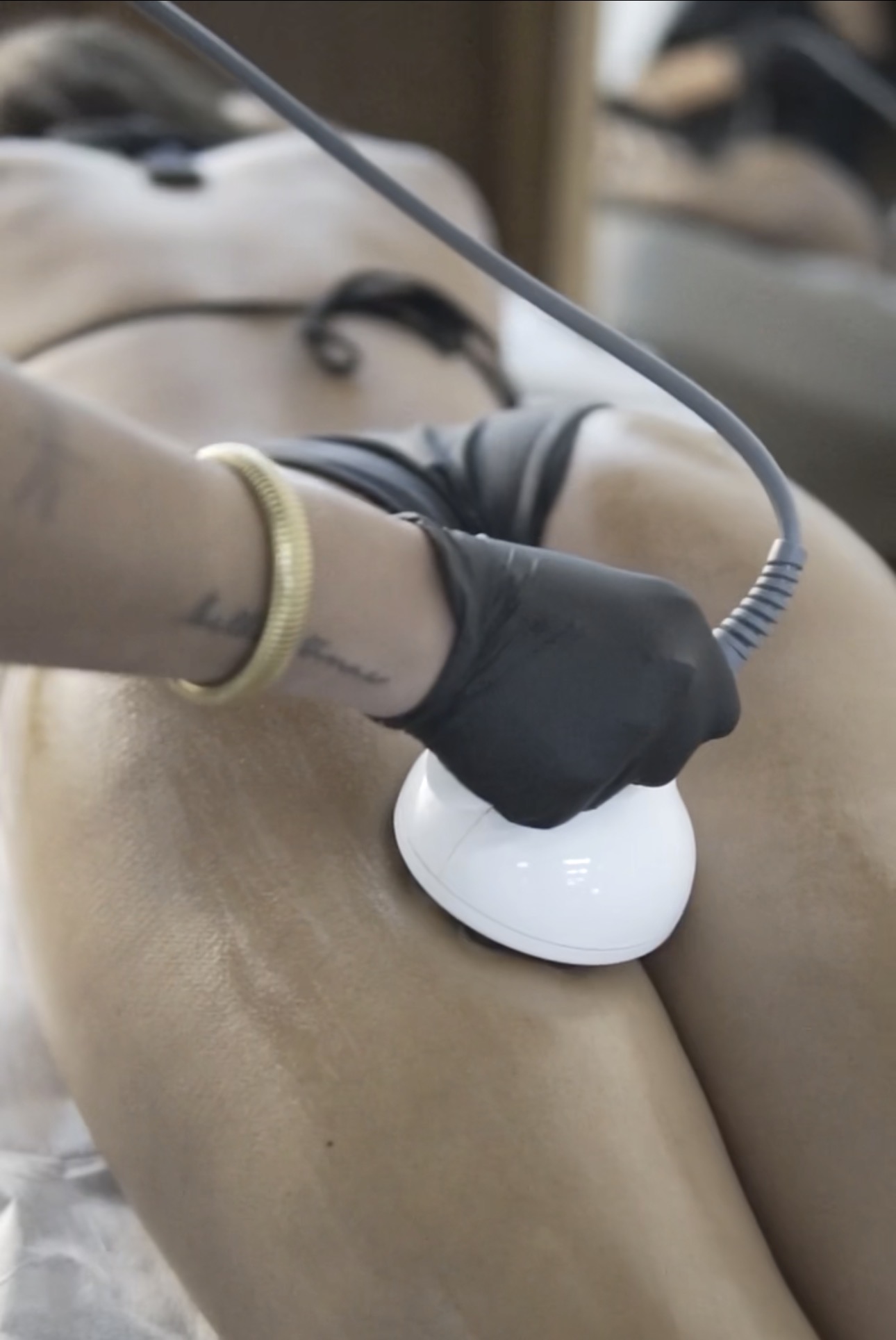
Does RF Skin Tightening Actually Work? What to Know Before You Book
Radiofrequency (RF) skin tightening comes up constantly in body contouring conversations, and for good reason — it's one of the more established non-surgical technologies for addressing loose or lax skin. But "does it actually work" is a fair question, and the honest answer depends on understanding what RF is designed to do, and what it isn't.
How RF Skin Tightening Works
Radiofrequency devices deliver controlled heat energy to the deeper layers of the skin, well below the surface. That heat is designed to stimulate the skin's natural collagen and elastin production — the structural proteins responsible for firmness and elasticity, which naturally decline with age. Treatments like Venus Legacy pair RF energy with pulsed electromagnetic fields to help the heat distribute more evenly through the treatment area, which is also designed to support fat reduction and cellulite smoothing alongside the skin-tightening effect.
What the Evidence Generally Supports
Radiofrequency-based skin treatments are a well-established category in medical aesthetics, with a long history of clinical use for skin tightening and collagen stimulation. The general dermatological understanding is that controlled, repeated heat exposure to the dermis can meaningfully stimulate collagen remodeling over time — which is the underlying mechanism RF technology is designed around. That said, research on any individual device or protocol varies, and results are not guaranteed or identical from person to person. Skin type, age, treatment area, and consistency with your session plan all play a role in outcomes.
What RF Skin Tightening Is Realistically Designed to Do
RF treatments are designed to help improve the appearance of mild to moderate skin laxity — think early-stage looseness rather than significant excess skin. It's not a substitute for surgical procedures like a facelift or tummy tuck in cases of significant skin laxity, and it's not a weight-loss treatment. For the right candidate, it can be a meaningful non-surgical option to support firmer, more toned-looking skin over a series of treatments.
Who Tends to See the Most Noticeable Improvement
Clients with mild to moderate skin laxity — rather than significant excess skin — tend to be the best candidates for RF skin tightening. It's also commonly used by clients who've recently lost weight through diet, exercise, or a medical weight loss program and want additional support with skin tone as their body changes. A consultation is the most reliable way to know whether RF skin tightening is likely to meet your specific goals.
What to Expect From a Session
RF skin tightening sessions, like those used in Venus Legacy treatments, are generally described as warm and comfortable rather than painful, with no downtime afterward. Results build gradually — most protocols involve a series of weekly sessions rather than a single treatment, since collagen remodeling is a gradual biological process rather than an instant change.
Try RF Skin Tightening in Tarzana
If you're curious whether RF skin tightening is a good fit for your skin and goals, learn more about Venus Legacy RF skin tightening at Club Contour Studios in Tarzana, or reach out to schedule a consultation. We serve clients throughout Tarzana, Encino, Woodland Hills, and the San Fernando Valley.